
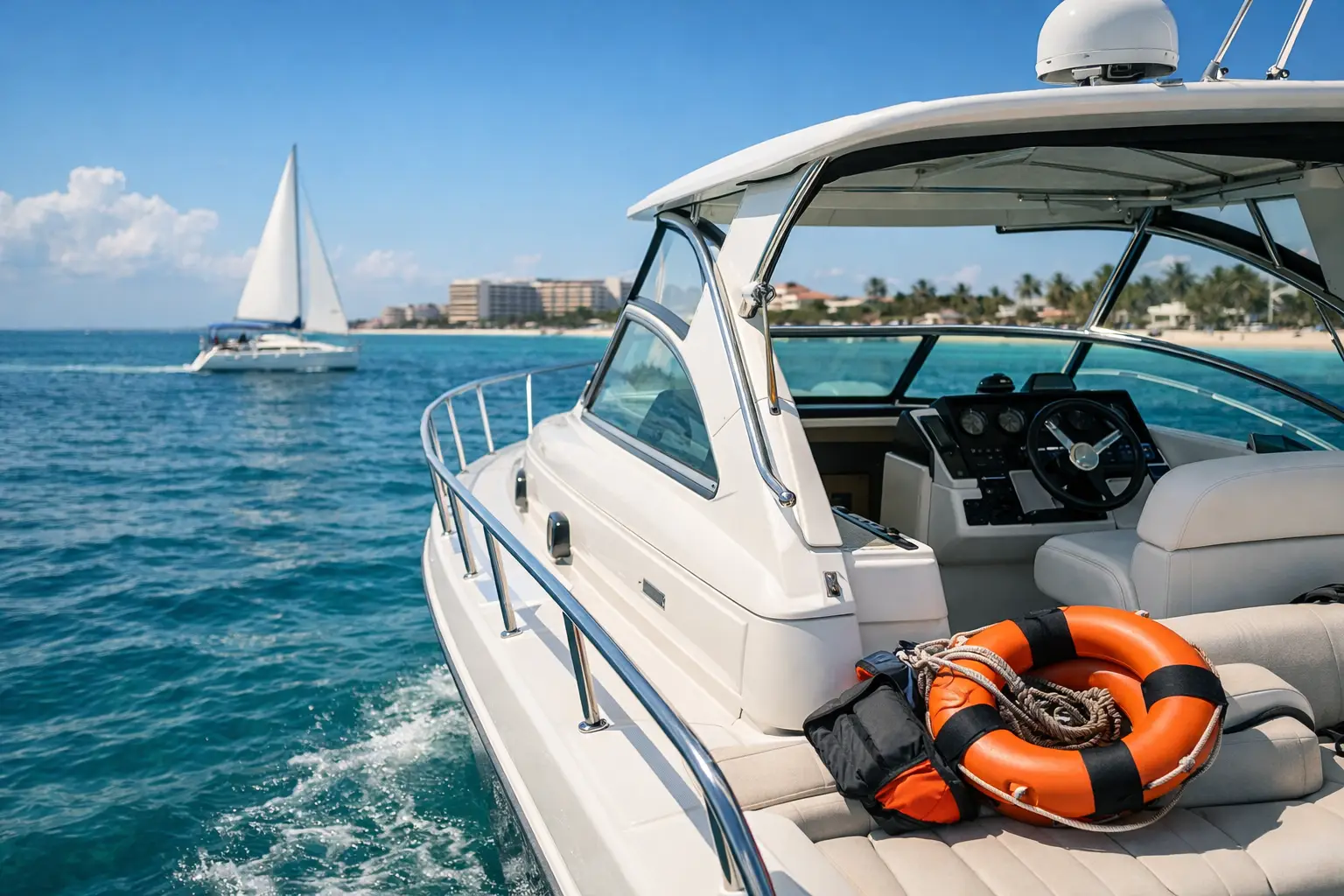
If you keep a boat in Mexico, the question usually comes up right after marina fees, permits, and storage – what happens if you damage another vessel, injure a passenger, or cause a problem at the dock? Boat liability insurance in Mexico is the coverage that answers that question, and for many foreign owners, it is one of the most practical protections to put in place before the boat ever leaves the slip.
For American and Canadian owners, this is not just a box to check. Mexico has its own legal environment, its own carriers, and its own claims process. A policy you bought for use in the US or Canada may not respond the way you expect once the boat is operating in Mexican waters. That gap is where people get caught off guard.
Why boat liability insurance in Mexico matters
Liability coverage is about damage or injury you may cause to others. If your boat strikes another vessel, damages a marina structure, or someone is hurt in an incident tied to your operation of the boat, liability insurance may help cover legal responsibility up to the policy limits.
That sounds simple, but the real issue is jurisdiction. Many owners assume their home-country marine policy automatically extends into Mexico with the same terms, same legal handling, and same recognition by local operators or marinas. Sometimes there is limited territorial coverage. Sometimes there is none. Sometimes physical damage is addressed but local liability expectations are not. It depends on the carrier and the wording.
In practical terms, if you boat in places like Puerto Vallarta, Los Cabos, Cancun, La Paz, or along the Riviera Maya, you want a policy built for Mexican exposure, not one that leaves room for argument after a loss.
What this coverage usually protects against
Boat liability insurance in Mexico generally focuses on third-party responsibility. That means it is designed to protect you if your boat causes bodily injury to another person or property damage to someone else’s vessel, dock, marina equipment, or other insured property.
It may also respond to legal defense costs related to covered claims, although the scope varies by carrier. Some policies are straightforward and narrow. Others can be packaged with broader marine protection. The details matter because not every owner has the same risk profile.
A center-console used for occasional coastal cruising presents a different exposure than a sportfisher, sailboat, yacht, or liveaboard vessel with guests coming aboard regularly. The more people, value, and movement involved, the more important it is to review limits and exclusions carefully.
What liability insurance does not automatically include
One of the most common misunderstandings is assuming liability coverage insures the boat itself. It does not necessarily do that. Liability coverage is for damage or injury you cause to others. Hull coverage, if available and purchased, is what may help with damage to your own boat.
Fuel spill liability, wreck removal, towing, personal effects, fishing equipment, and named storm exposure may also fall outside a simple liability-only policy or may be subject to special terms. If your boat is financed, moored in a particular marina, operated by hired crew, or used for charters, the coverage question becomes even more specific.
That is why the right conversation is not just, Do I have boat insurance? It is, Do I have the right kind of marine liability coverage for how I use this boat in Mexico?
Common situations where owners run into trouble
The problems are usually not dramatic at first. A minor docking incident, an injury while boarding, or a collision in a crowded marina can quickly turn into a larger claim once repair costs, medical bills, or legal responsibility come into play.
Another issue is assuming occasional use means low exposure. In reality, many losses happen during routine handling – leaving the slip, tying up, navigating tight channels, or hosting friends who are unfamiliar with the boat. Even experienced boaters can have claims, especially in busy tourist and marina areas.
Owners also run into trouble when the boat’s use changes over time. A vessel that began as private recreational use may later be lent to guests, operated by a captain, or used more often during peak seasons. If the policy was never updated, coverage disputes can follow.
How to choose the right boat liability insurance in Mexico
Start with the basics: where the boat is kept, where it operates, what type of vessel it is, how it is used, and who operates it. These facts drive eligibility and pricing more than many owners expect.
The next step is liability limits. Choosing the cheapest option can feel efficient, but low limits may not go very far if another boat is seriously damaged or a person is injured. Higher-value marinas and higher-value vessels tend to justify stronger limits.
You should also ask about territorial boundaries. Some boat owners stay close to one home marina. Others move seasonally or cruise more broadly. If your navigation area changes, your policy should reflect that.
Operator details matter too. If only one named owner operates the boat, underwriting is usually simpler than when multiple family members, friends, or hired captains are involved. The more shared use there is, the more important it becomes to confirm who is covered.
Questions worth asking before you bind coverage
A good quote process should answer more than price. You want to know whether the policy is specifically written for Mexico, what the liability limit is, whether legal defense is included, whether there are marina requirements, and what exclusions apply.
It is also smart to ask how claims are handled. This is especially important for expats and seasonal residents who may not be in Mexico year-round or may need English-speaking support. A policy can look fine on paper and still become frustrating if claims handling is unclear or slow.
If your boat is part of a bigger cross-border lifestyle, coordination matters. Owners who already insure Mexican homes, condos, autos, travel, or health coverage often benefit from working with an advisor who understands how those risks connect. Launa Brockman Expat Insurance works in that lane, helping expats sort out practical insurance needs in Mexico without making the process harder than it needs to be.
Marina rules, financing, and proof of coverage
Some owners do not think about liability insurance until a marina requests proof of coverage. Others discover the requirement during a slip application, storage arrangement, or financing review. Even when it is not legally demanded in every situation, marinas often want evidence that a vessel carries acceptable liability protection.
This is where having the right documentation matters. You want a policy that clearly identifies the vessel, the insured party, the coverage dates, and the liability limit. If a marina or lender asks for proof, delays can become expensive and inconvenient.
Why working with a specialist helps
Marine insurance in Mexico is not impossible to arrange, but it is easy to oversimplify. Foreign owners often need guidance that goes beyond a generic insurance quote. They need someone who understands Mexico-based risk, local carrier access, and the difference between what a US or Canadian policy appears to say and how coverage actually applies once the boat is in Mexico.
That is especially true if your situation includes a foreign-plated vehicle in Mexico, a second home, extended stays, residency issues, or multiple insurable assets spread across borders. The right brokerage support can save time, but more importantly, it can help prevent avoidable gaps.
The practical next step
If you own a boat in Mexico or plan to bring one down, the best time to review liability coverage is before the season starts, before you sign a marina agreement, and definitely before there is a claim. Waiting until after an incident is when the fine print suddenly becomes very expensive.
A clear quote request with the vessel details, location, use, and operator information is usually the fastest way to see what is available. From there, you can compare limits, confirm eligibility, and make sure the policy fits how you actually use the boat, not how you used it two years ago.
On the water, small mistakes can turn into large liabilities quickly. The right policy gives you a cleaner way to move forward, with fewer assumptions and a lot more confidence.