
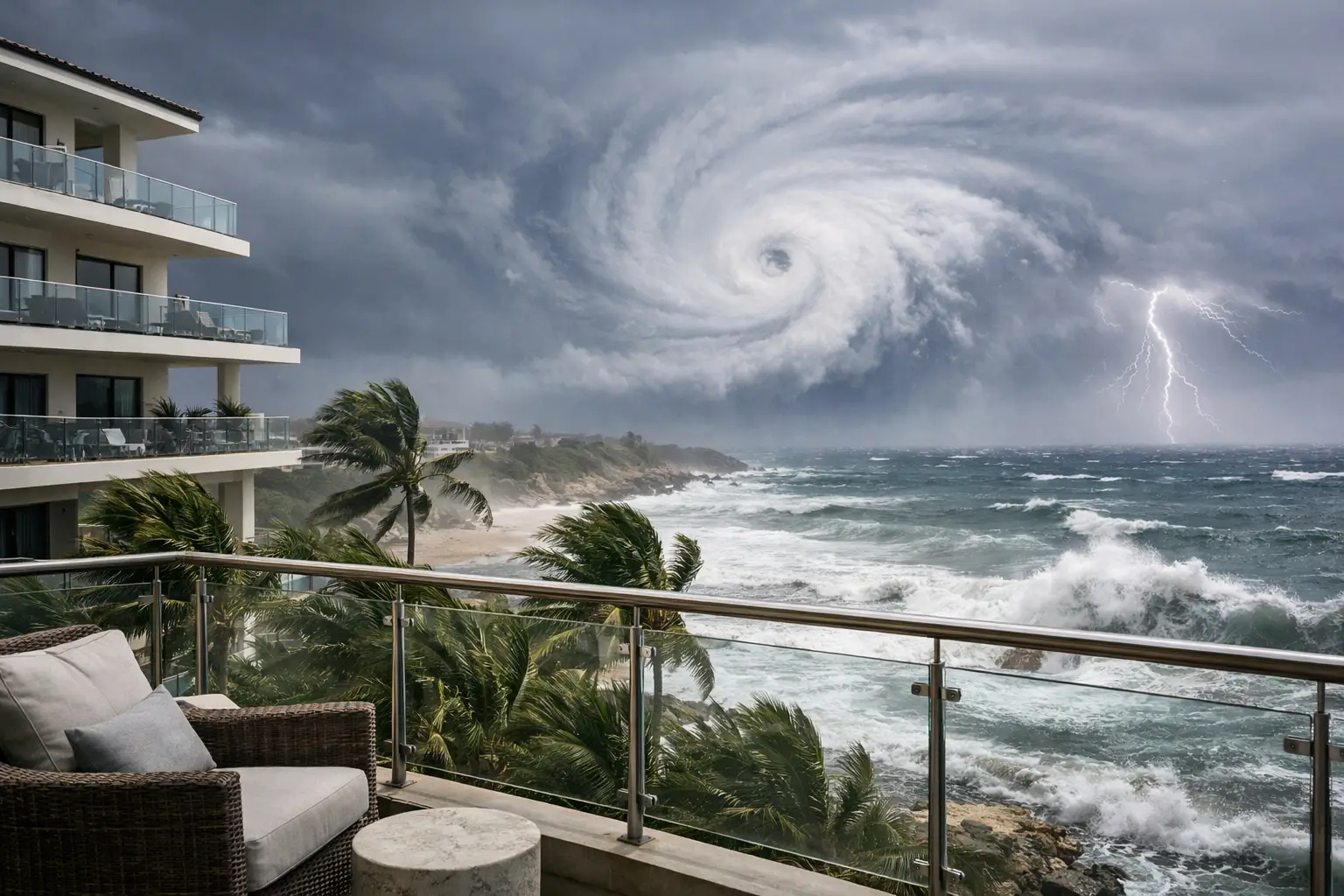
If you own a condo in Los Cabos, Puerto Vallarta, Cancun, or along another storm-exposed coast, this question matters before the next named storm is on the radar: does Mexico condo insurance cover hurricanes? The short answer is often yes, but not always in the way owners expect, and the details in the policy matter more than the label on the quote.
A lot of condo owners assume hurricane coverage is automatic if they have property insurance. In Mexico, that can be true for some policies, limited for others, and subject to separate deductibles, waiting periods, territory rules, or construction requirements. For expats and second-home owners, the biggest mistake is finding out after a loss that the building, interior improvements, contents, and loss assessment were not insured the way they thought.
Does Mexico condo insurance cover hurricanes in every policy?
Not every policy covers hurricane damage the same way. Many Mexican condo insurance policies can include coverage for windstorm, cyclone, hurricane, hail, and related perils, but inclusion depends on the insurer, the location of the property, and the coverage package selected. Coastal zones and high-risk regions are usually underwritten more carefully, and some insurers apply stricter terms there.
That means one condo policy may include hurricane damage to the interior finishes and contents, while another may only do so if specific endorsements are added. Some policies are written on a named-perils basis, which means the covered causes of loss are listed. Others are broader, but still contain exclusions and special conditions for catastrophic weather.
This is where owners get tripped up. Saying a condo is “insured” is not enough. You need to know exactly what part of the property is insured and against which perils.
What hurricane damage is usually covered?
When hurricane coverage is included, Mexico condo insurance often responds to direct physical loss caused by high winds, flying debris, heavy rain entering after storm damage, and in some cases damage tied to resulting events such as fire. Coverage usually applies to the insured portion of the unit and to insured personal contents, up to the policy limits.
For condo owners, the insured portion of the unit may include interior walls, cabinets, flooring, fixtures, glass, built-ins, countertops, and improvements you made after purchase. Contents can include furniture, electronics, appliances you own, clothing, and household items. If you rent the unit out, furnishings for guest use may also need to be specifically declared or valued correctly.
Some policies also include extra expense or loss-of-rent options. That can matter if a covered hurricane loss makes the condo temporarily uninhabitable. But this benefit is not universal, and the triggers for payment vary.
What is often not covered after a hurricane?
This is the part owners should slow down and review carefully. Flood is not always treated the same as windstorm. If storm surge, overflowing water, or external flooding causes the damage, coverage may be limited or excluded unless flood is specifically included. A lot of people use “hurricane damage” as one category, but insurers separate the cause of loss.
For example, wind that breaks a window and damages interior finishes may be covered, while rising water entering from outside may fall under a different rule. If your condo is in a low-lying coastal area, this distinction is a big deal.
There can also be exclusions for wear and tear, poor maintenance, pre-existing leaks, corrosion, construction defects, or vacant-property conditions. If an insurer believes the damage happened because seals, roofing elements, or windows were already compromised, the claim can become more complicated.
Common area damage is another point of confusion. Your unit policy generally does not replace the entire building. The condominium association or HOA usually carries master coverage for common elements such as the roof, structure, elevators, lobbies, and shared amenities. Your own policy may help with assessments charged back to owners in some cases, but that is not automatic.
Why condo owners in Mexico need to check the master policy
A condo owner does not insure in a vacuum. You have your individual unit policy, and the building should have a master policy arranged by the condo regime, HOA, or administration. The line between those two policies is one of the most important parts of hurricane planning.
Some master policies insure the building shell only. Others insure more of the original interior construction. In one building, the owner may be responsible from the studs inward. In another, the master policy may cover original finishes but not upgrades. If you renovated your kitchen, added custom cabinetry, or upgraded flooring, you need to know whether those improvements sit under the building’s insurance or your own.
This matters after a hurricane because a dispute over who covers what can delay repairs. The best approach is to review both layers ahead of storm season and make sure there are no gaps.
Deductibles for hurricane claims are often higher, but not always.
Even when the answer to does Mexico condo insurance cover hurricanes is yes, the deductible may be much higher than for everyday losses, however Launa with Novamar insurance offers plans that do not have a higher deductible, giving the client options.
Catastrophe deductibles are commonly expressed as a percentage rather than a flat amount. That percentage may apply to the insured value of the property, the affected section, or another policy basis defined in the contract.
In practical terms, a hurricane claim can leave the owner paying much more out of pocket than expected. That is not a reason to skip coverage. It is a reason to understand the numbers before you buy.
If you are comparing quotes, do not compare premium alone. A lower premium with a restrictive windstorm deductible or narrower catastrophe wording may not be the better deal for a coastal condo.
What insurers look at before offering hurricane coverage
Underwriting in Mexico is very location-sensitive. Insurers may look at the distance from the coast, local storm history, construction type, age of the building, roof design, shutters or storm protections, occupancy, and whether the condo is owner-occupied, seasonal, or rented to guests.
A newer reinforced concrete building in a well-managed development may be easier to place than an older unit with maintenance issues. Vacation rentals can also be treated differently than owner-occupied second homes. If the condo sits empty for long stretches, some insurers want to know how often it is checked and whether water shutoff, security, or storm preparation procedures are in place.
These details are not just underwriting formalities. They can affect whether hurricane coverage is available, how broad it is, and what it costs.
How to tell if your Mexico condo insurance is actually adequate
The fastest way to evaluate a policy is to stop thinking only about the purchase price of the condo and focus on replacement exposure. Insurance should reflect what it would cost to repair or rebuild the insured parts of the unit, replace contents, and handle related expenses after a covered storm loss.
That means checking your dwelling or building limit, contents limit, deductible structure, covered perils, glass coverage, improvements and betterments, and any loss-of-rent or extra expense section. You also want clarity on whether flood or storm surge is included, excluded, or available separately.
If you own in a condo complex, ask for the current master policy details and review the bylaws or condominium regime documents. Those documents often define the insurance responsibilities of the association versus the unit owner. Without them, you are guessing.
For expats, this is where working with a broker who handles Mexico property risks every day can save time and expensive misunderstandings. Launa Brockman Expat Insurance helps owners sort through Mexican carrier options, deductible structures, and condo-specific coverage questions so the quote matches the real exposure.
Questions to ask before hurricane season
Before the weather shifts, ask a few direct questions. Does the policy include hurricane and windstorm? Is flood or storm surge covered? What is the catastrophe deductible? What part of the condo unit am I responsible for insuring? Are short-term rentals allowed under the policy? Is loss of rental income available? Are there vacancy conditions or storm-preparation requirements that could affect a claim?
Those are better questions than simply asking whether the condo is covered. They produce useful answers.
The bottom line for expat and second-home owners
Mexico condo insurance can cover hurricanes, but coverage is never something to assume, especially in coastal markets. The real issue is not just whether hurricane appears somewhere in the policy wording. It is whether the policy covers your part of the property, the right causes of loss, and a deductible you can live with if a claim happens.
A condo in Mexico can be a great lifestyle asset and a valuable investment, but storm exposure is part of ownership. The smartest move is to review your policy before there is a named storm, not after the adjuster arrives.
Contact Launa Brockman for additional information. BrockmanLauna@yahoo.com.