
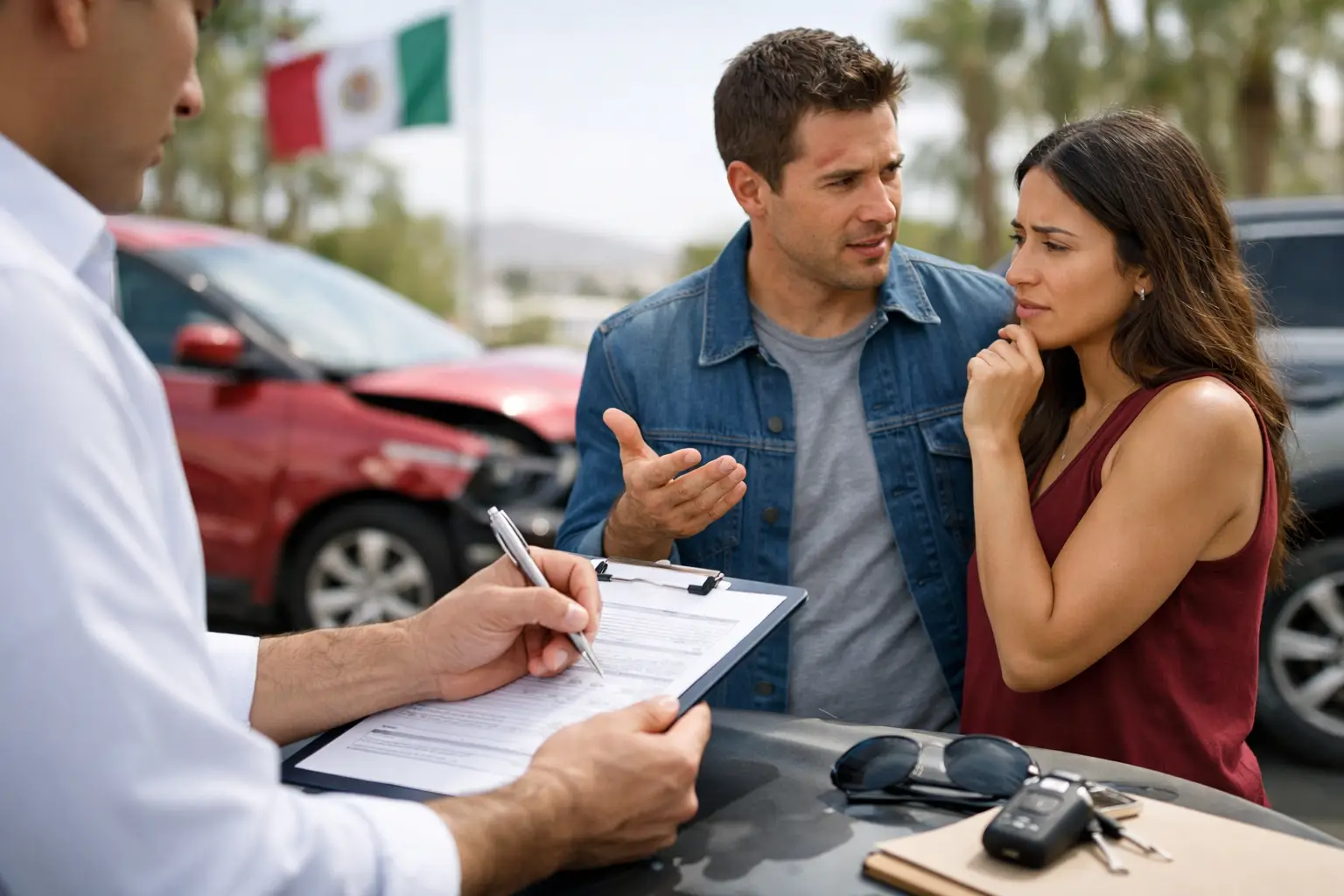
A fender-bender on the highway outside Puerto Vallarta or a more serious accident near Cancun can become stressful quickly if you treat it like a U.S. or Canadian claim. How Mexican auto claims work is different because the insurer’s on-scene response, the local authorities, and your legal liability can all affect what happens next.
The practical rule is simple: keep a valid Mexican auto policy in the vehicle, call the insurer immediately, and wait for instructions before trying to settle or move on. A good policy is more than proof of coverage. It gives you access to a claims team that understands the local process and can help protect your position at the scene.
What to Do First After a Mexico Auto Accident
Start with safety. If anyone appears injured, call emergency services at 911 and request medical assistance. Move yourself and passengers away from traffic only when it is safe to do so. Do not leave the scene, especially if another vehicle, pedestrian, cyclist, public property, or injury is involved.
Then call the claims number shown on your Mexican auto insurance policy. Most carriers operate a 24-hour claims line, often called a cabina. Give the representative your location, a nearby landmark or highway kilometer marker, vehicle details, and a brief description of what happened. If you are using a foreign-plated vehicle, have your policy number, driver’s license, registration, and immigration documentation available.
Your insurer will typically dispatch an adjuster, known in Mexico as an ajustador, to the accident scene when service is available in that area. The adjuster is a key part of the process. They inspect damage, speak with the parties involved, coordinate with authorities when necessary, and explain the next steps under your policy.
While you wait, take clear photos of vehicle positions, damage, license plates, road conditions, traffic signs, and any visible injuries. Get contact information from witnesses if possible. Keep your comments factual. Do not sign an agreement you do not understand, admit fault, offer cash, or promise to pay for another person’s damage before speaking with the insurer.
How Mexican Auto Claims Work at the Scene
In many routine accidents, the adjusters for both drivers discuss the facts, review the damage, and work toward an agreement about responsibility. If the parties agree and there are no serious injuries or major complications, the claim may proceed without a lengthy police process.
If there is a disagreement, injury, extensive property damage, an uninsured driver, or a possible criminal issue, local police or other authorities may become involved. Procedures vary by state and municipality. This is where legal defense and bail bond coverage can matter. Depending on the policy and circumstances, these benefits can help provide legal assistance and support if an accident leads to detention or legal proceedings.
Mexican liability law can be more consequential than many visitors expect. Liability coverage is legally required on federal roads, and local requirements may apply as well. The right policy should include meaningful third-party liability limits, not just the minimum amount needed to satisfy a legal requirement. A serious injury claim can exceed a low-limit policy quickly.
Your adjuster does not decide legal fault in every situation, and an insurer cannot erase a serious legal problem. But prompt reporting and cooperation give the carrier the best opportunity to assist you. Leaving before the adjuster arrives can make a straightforward claim harder to document and may affect coverage.
Why a U.S. or Canadian Policy Usually Is Not Enough
Your home-country auto policy may offer little or no protection once you cross into Mexico. Mexico requires insurance issued by a company authorized to handle claims in Mexico. A separate Mexican auto policy is the normal solution for American- and Canadian-plated vehicles traveling or residing in the country.
That policy should match how you actually use the vehicle. A short-term tourist policy may suit a vacation drive to Los Cabos. A full-time resident with a Mexican-plated vehicle may need an annual Mexican policy. Coverage availability can also depend on the vehicle’s age, value, location, and whether it is privately used or connected to rental, delivery, business, or commercial activity.
What the Adjuster May Arrange
Once coverage and the accident facts are reviewed, the adjuster may authorize a repair facility, towing, roadside assistance, medical coordination, or a payment arrangement for covered third-party damage. The exact process depends on your carrier, policy type, location, and the severity of the loss.
For a minor covered collision claim, you may receive a repair order for an approved shop. Some policies allow you to select a repair shop, while others require use of the carrier’s network or approval before repairs begin. Ask before authorizing work or paying out of pocket. Keep every receipt, estimate, invoice, and written report.
If the vehicle cannot be driven, the carrier may arrange a tow to a nearby shop or safe location. Towing limits, destination rules, and roadside benefits differ by policy. Do not assume a policy will automatically transport your vehicle hundreds of miles to your home, the border, or a preferred mechanic.
For theft or total loss, expect more documentation. The insurer may require a police report, original registration, title or ownership documents, keys, identification, and proof of legal importation or temporary import status when applicable. Foreign-plated vehicles can involve added paperwork, particularly when a vehicle cannot leave Mexico because of damage or theft.
Coverage Issues That Can Change a Claim
Every claim is fact-specific, and policy language controls. Still, several situations regularly create problems for expat drivers and long-stay visitors.
The driver must generally have a valid license and permission to drive the insured vehicle. Alcohol or drug impairment, racing, intentional damage, or using the vehicle for an undisclosed commercial purpose can lead to exclusions or serious coverage limitations. Using a vehicle on unpaved roads or in remote areas can also raise questions if the policy has territorial or road-use restrictions.
Report the accident immediately. Delays make it more difficult for the insurer to inspect the scene, verify damage, and assist with authorities. If you have already moved the vehicle because of an urgent safety issue, tell the claims representative exactly why and provide photos if you have them.
Deductibles also matter. Physical damage coverage such as collision, rollover, fire, vandalism, and theft usually comes with a deductible. Third-party liability claims often work differently, but your policy may still have conditions, limits, or exclusions. Before buying, confirm whether deductibles are calculated as a percentage of the insured value or as a fixed amount, and ask what happens if your vehicle is declared a total loss.
Medical payments, legal assistance, roadside service, rental reimbursement, and travel expenses may be available as optional or included benefits. They are helpful, but they are not identical from carrier to carrier. A policy built only around the lowest premium may leave gaps that become obvious at the worst possible time.
Documents to Keep in Your Vehicle
Keep your policy certificate and claims phone number where you can reach them without relying on cell service. Store digital copies on your phone, but carry paper copies as well. You should also have your driver’s license, registration, passport or other identification, and immigration documents relevant to your stay.
For a foreign-plated vehicle, retain copies of any temporary vehicle import permit and related paperwork. For a Mexican-plated vehicle, make sure the registration and policy vehicle information match the car you are driving. Small errors in a VIN, plate number, or named driver are easier to correct before an accident than during a claim.
It also helps to save the insurer’s claims number in your phone under a clear name. After an accident, searching through emails or trying to log into a portal with shaky roadside service is not ideal.
Choosing Coverage With Claims in Mind
The best time to think about a claim is before one happens. When comparing Mexican auto insurance, look beyond the premium and ask who will respond, how legal assistance works, where roadside benefits apply, and whether the liability limit is appropriate for the places you drive.
For expats who live in Mexico part- or full-time, the right answer often depends on the vehicle’s plates, where it is garaged, how long it remains in Mexico, and whether other household members drive it. Launa Brockman Expat Insurance can help sort through those details and place coverage that fits your actual use, rather than a generic short-term travel scenario.
If an accident happens, stay calm, call the insurer from the scene, document what you can, and let the adjuster guide the process. That preparation gives you more room to focus on the people in the vehicle and less reason to make costly decisions under pressure.