
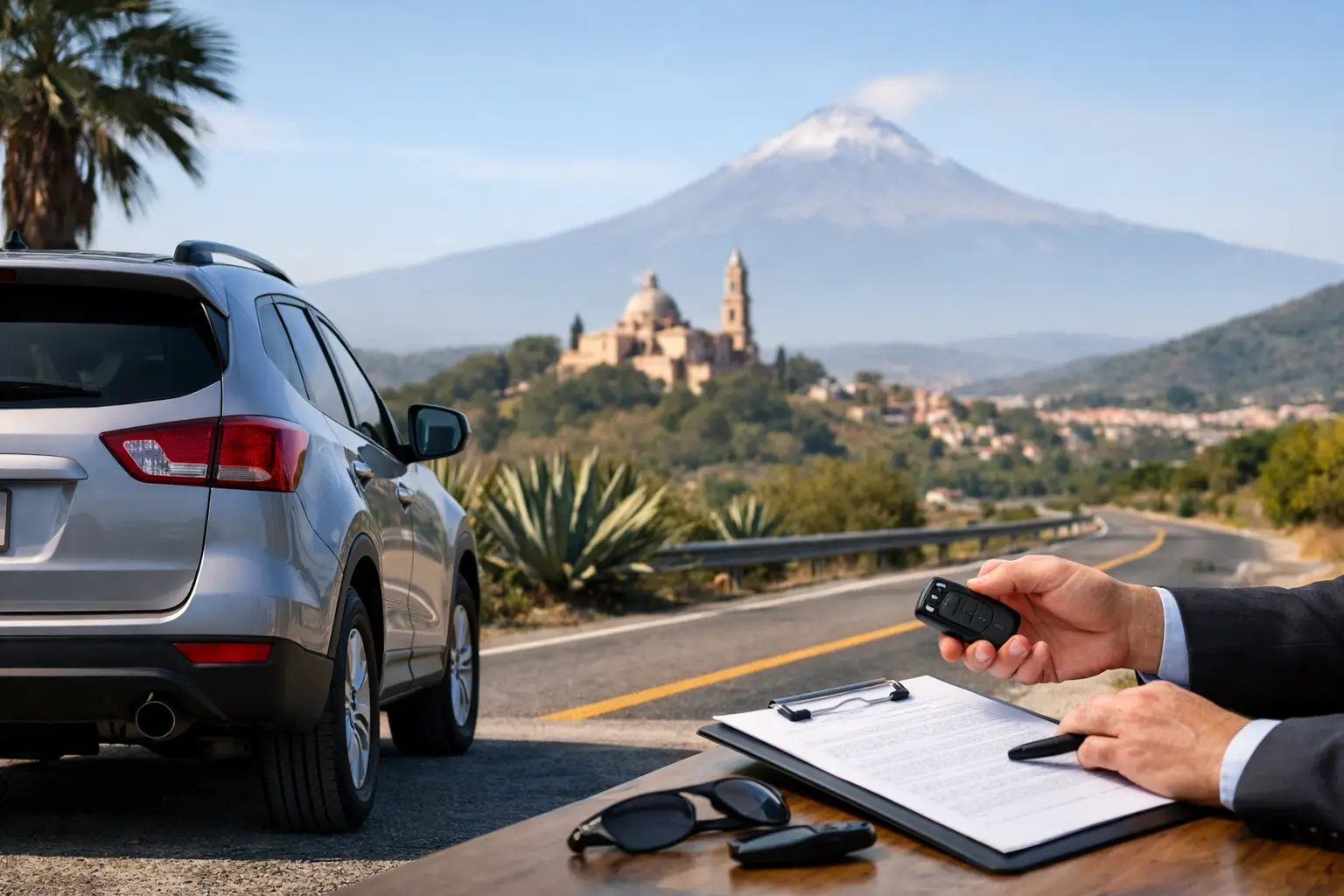
A drive from Texas to San Miguel de Allende, a winter stay in Puerto Vallarta, or a permanent move to Lake Chapala all start with the same practical question: will your vehicle be properly insured once it crosses into Mexico? This foreign plated vehicle insurance guide explains what American and Canadian drivers need to arrange before driving a foreign-plated vehicle in Mexico.
Your U.S. or Canadian auto policy may provide limited travel benefits, but it generally does not satisfy Mexico’s legal requirements or handle a Mexican claim in the way you need. A Mexican auto policy is designed to respond locally, with coverage, legal support, and claims procedures built for Mexico.
Why foreign-plated vehicles need Mexican insurance
Mexico requires drivers to carry liability coverage from an insurer authorized to operate in Mexico. This is not a technical detail to leave until the border. If you cause an accident, liability coverage helps pay for injuries or property damage to others, subject to the policy limits and terms you select.
A policy issued in the United States or Canada may include some protection while traveling south of the border, but that does not mean it is a substitute for a Mexican policy. Claims can involve local authorities, Spanish-language documentation, repair facilities, medical care, and legal procedures. Mexican insurance is structured to respond to those realities.
For most expats, snowbirds, and long-stay visitors, the practical answer is to buy a Mexican auto policy for the full period the vehicle will be in Mexico. You can often choose an annual policy for regular use or a short-term policy for a specific trip. The right choice depends on how often you drive in Mexico, how long you stay, and whether the vehicle remains in the country between visits.
Foreign plated vehicle insurance guide: choose coverage first
The cheapest policy is not always the least expensive choice after an accident. Start with the coverage that protects your actual exposure, then compare deductible options and policy limits.
Third-party liability
Third-party liability is the foundation of a Mexican auto policy. It addresses damage or injuries you cause to others. Liability limits matter. A serious injury claim can exceed a low limit quickly, so drivers with assets to protect should consider higher liability limits rather than selecting the minimum available option.
Many policies also include legal assistance tied to a covered accident. This can be especially valuable for foreign drivers who are unfamiliar with local procedures. Read the policy wording to understand when legal support applies and whether you must contact the insurer immediately from the accident scene.
Physical damage and theft
Liability-only coverage protects other people, not your own vehicle. If you want coverage for collision, rollover, fire, weather damage, vandalism, or theft, choose physical damage and theft coverage.
These coverages are particularly worth considering for newer vehicles, vehicles with a loan, or vehicles you could not comfortably replace out of pocket. Deductibles are usually expressed as a percentage of the insured value, so confirm both the deductible percentage and the value assigned to the vehicle. A lower premium with a high deductible may not fit your budget when a claim occurs.
Medical expenses and roadside assistance
Medical payments for vehicle occupants can help after an accident, although limits and eligibility vary by policy. This is not a replacement for Mexican or international health insurance, but it can provide useful accident-related protection.
Roadside assistance may include towing, battery service, flat-tire help, locksmith assistance, or emergency fuel delivery. The service area and towing limits matter. If you regularly drive remote roads in Baja, the Yucatan, or the Pacific coast, ask how assistance works outside major cities.
Legal assistance, bail bond, and U.S. repair options
Mexican auto policies commonly include legal defense and may include a bail bond benefit when conditions are met. These benefits are a major reason to use a policy designed for Mexico. Still, they are not automatic permission to leave an accident scene. Always follow the insurer’s instructions and cooperate with local authorities.
Some policies offer a U.S. repair option for qualifying claims, usually when you are close enough to the border and meet the carrier’s requirements. This can be useful for drivers who prefer repairs in the United States, but it is not available on every plan or for every loss. Confirm the details before relying on it.
Have the right vehicle and travel documents
Insurance and vehicle importation are separate issues. A valid Mexican policy does not replace the documents required to bring or keep a foreign-plated vehicle in Mexico.
Depending on where and how you enter, you may need a temporary import permit. Rules differ in border zones and certain regions, including parts of Baja California and Sonora. Your immigration status, where the vehicle is registered, who owns it, and how long it remains in Mexico can affect what is permitted. These requirements can change, so verify current rules directly with the appropriate Mexican authorities before travel.
For insurance quoting and claims, keep clear copies of your vehicle registration, driver’s license, passport, immigration document if applicable, and any temporary import paperwork. If the vehicle is financed or leased, check your lender or leasing company’s rules before taking it into Mexico. Some agreements require written authorization.
The named insured should accurately reflect the person with an insurable interest in the vehicle. If a spouse, adult child, friend, or employee will drive, disclose that during the quote process and review the driver provisions. Do not assume every driver is covered under every policy.
How to compare Mexican auto insurance quotes
A fast quote is useful, but compare more than the price. Two policies that appear similar can have very different deductibles, vehicle valuation methods, liability limits, and included benefits.
When reviewing options, look at the insured vehicle value, physical damage deductible, theft deductible, liability limit, medical expense limit, legal assistance terms, roadside assistance territory, and exclusions. Ask whether the policy covers travel throughout Mexico and whether there are any restrictions related to vehicle age, use, or location.
Be precise about how the vehicle is used. Personal driving, occasional commuting, rideshare activity, delivery work, business use, and commercial transport are not interchangeable. A personal auto policy may exclude commercial use. If you use the vehicle for a rental property, business, deliveries, or paid transportation, request a quote built for that exposure.
Launa Brockman Expat Insurance can help compare Mexican auto insurance options for American- and Canadian-plated vehicles, including annual and short-term coverage, so you can match the policy to your travel plans instead of guessing from a generic quote screen.
What to do after an accident in Mexico
An accident is the moment when preparation matters. First, stop in a safe location if possible, check for injuries, and call emergency services when medical help is needed. Do not leave the scene simply because damage appears minor.
Call the Mexican insurer’s claims number as soon as you can. The carrier may send an adjuster to document the accident and help coordinate the next steps. Avoid admitting fault, signing documents you do not understand, or making a private cash settlement before speaking with the insurer. If police are involved, remain calm and follow the adjuster’s guidance.
Keep your policy number and claims phone number saved in your phone and stored in the vehicle. Internet service can be unreliable after an accident, so a printed copy is still smart. Take photos of vehicles, plates, the roadway, traffic signals, damage, and relevant documents when it is safe to do so.
Common mistakes to avoid
The most common mistake is waiting until the day of travel and buying the first low-cost policy available. Another is assuming a U.S. or Canadian policy will handle everything in Mexico. Both choices can create stress when you need help quickly.
Also avoid underinsuring the vehicle, selecting liability limits without considering your financial exposure, or failing to disclose how the vehicle is used. If your plans change from a two-week trip to seasonal residence, revisit the policy rather than assuming the original coverage still fits.
Before your next border crossing, get the Mexican policy issued, review the declarations page, save the claims number, and carry your vehicle documents. That small amount of preparation gives you a clearer path forward if the unexpected happens on a Mexican road.