
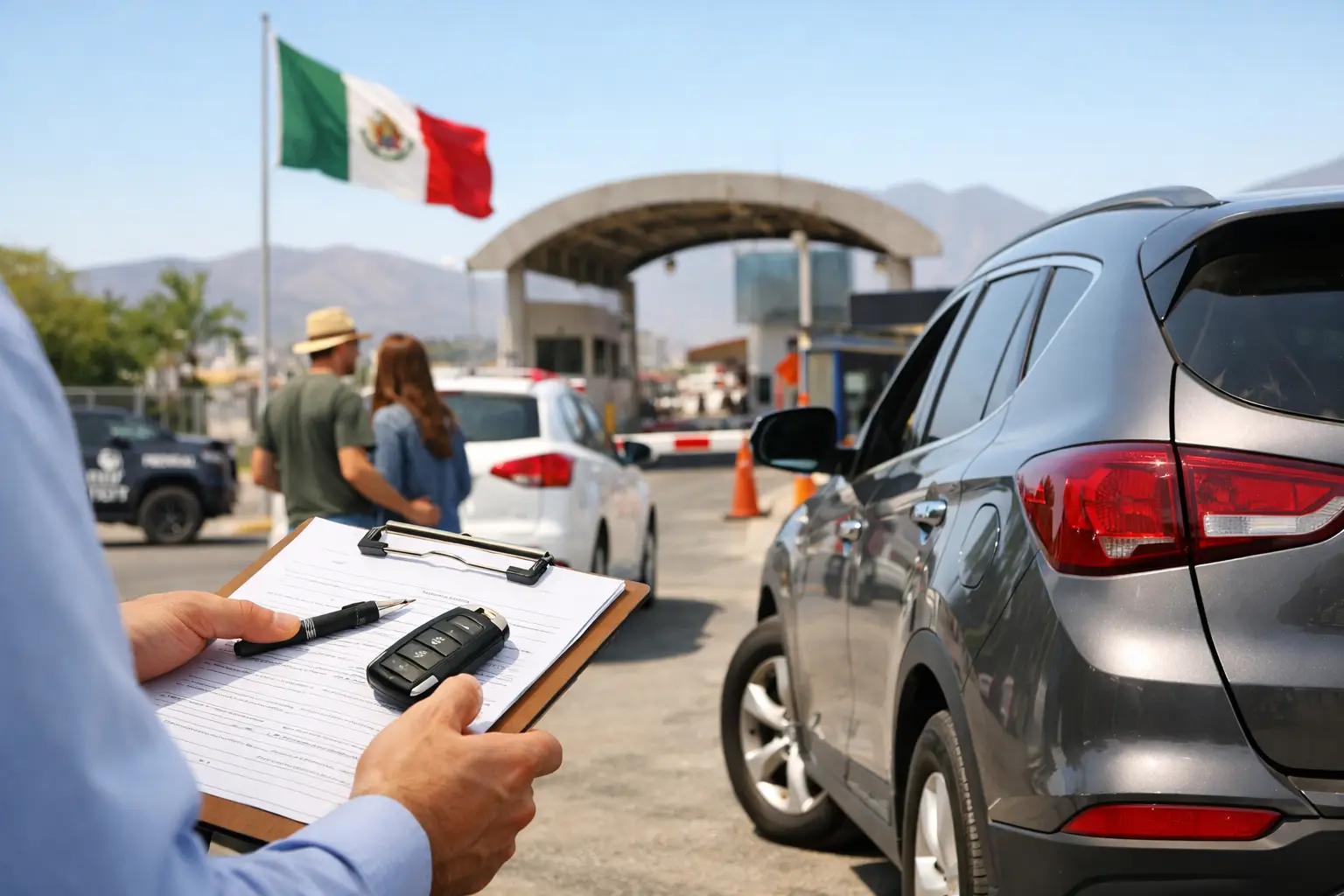
Get stopped after a fender bender in Mexico and the first question is not whether your U.S. or Canadian policy is excellent back home. It is whether you meet Mexico car insurance legal requirements with a policy issued by an authorized Mexican insurer. That detail matters fast, especially if there is property damage, injury, or a dispute at the scene.
For expats, snowbirds, retirees, and long-stay visitors, this is where confusion starts. Many drivers assume their domestic auto policy will carry over because they are only crossing the border for a short trip or driving a foreign-plated vehicle. In practice, Mexico handles auto liability under its own legal and insurance system. If you are driving in Mexico, you need Mexico coverage.
What the law actually requires
The core legal requirement is third-party liability coverage from a Mexican insurance company. That means your policy must be valid in Mexico and recognized by Mexican authorities. A U.S. or Canadian auto policy may offer limited physical damage extensions in some cases, but it generally does not satisfy legal liability requirements for driving on Mexican roads.
Federal roads in Mexico require liability coverage, and in real-world terms, carrying a proper Mexican auto policy is the standard for responsible driving anywhere in the country. State and local enforcement can vary, but relying on inconsistency is not a strategy. If you cause an accident and cannot show valid liability coverage, the problem can escalate quickly.
This is where people get tripped up by the phrase “full coverage.” In the U.S. and Canada, that term usually refers to a package that includes liability, collision, and comprehensive. In Mexico, what matters first is legally valid civil liability coverage. Everything else, while often advisable, is optional from a legal standpoint.
Mexico car insurance legal requirements for foreign drivers
If you drive a U.S.-plated or Canadian-plated vehicle into Mexico, the legal standard does not change. You still need Mexican liability coverage. The plate origin of the vehicle does not exempt you. Neither does residency status. Visitors, temporary residents, permanent residents, and part-time homeowners all need to match the policy to the vehicle and how it is being used in Mexico.
For some drivers, a short-term Mexico auto policy is enough. For others, especially expats or owners who keep a vehicle in Mexico for extended periods, an annual policy makes more sense. The right setup depends on how often you cross the border, whether the car stays in Mexico, and whether the vehicle has foreign or Mexican plates.
That last point matters because underwriting rules can differ. A policy for a U.S.-plated SUV used for seasonal travel is not always structured the same way as coverage for a Mexican-plated car used year-round by a resident. If you choose the wrong policy type, you may think you are insured when the actual eligibility does not line up.
Minimum liability is the legal baseline, not the practical target
Meeting the minimum legal requirement is one thing. Protecting yourself financially is another. Liability claims in Mexico can involve property damage, bodily injury, legal assistance, and in serious accidents, very high exposure. Choosing the cheapest policy simply because it checks the legal box can leave a large gap between what is required and what you would actually want in a claim.
This is especially relevant for expats with assets in both Mexico and their home country. If an accident causes serious injury, the costs can rise well beyond a bare-bones limit. A stronger liability limit is usually the better decision, particularly for people driving regularly in busy tourist corridors, urban areas, or mountain roads where accident severity can increase.
Policies may also include legal aid and bail bond assistance, which are not small extras in Mexico. After an accident, drivers can face a legal process that feels unfamiliar if they are used to U.S. or Canadian claims handling. Having a policy designed for Mexico helps with more than repairs. It helps with the immediate aftermath.
What is not legally required, but often worth adding
Once the liability requirement is handled, you can decide how much additional protection you want. Physical damage coverage for your own vehicle, theft, vandalism, glass breakage, roadside assistance, and medical payments for occupants are common add-ons or package features. They are not the legal requirement, but for many drivers they are the difference between a manageable inconvenience and a very expensive problem.
Whether you need them depends on the vehicle and your risk tolerance. If you are driving an older car with limited value, you may decide liability-only is enough. If you have a newer truck, a financed vehicle, or a car you rely on daily in Mexico, broader coverage is usually more sensible.
There is also a practical point many travelers miss. Some claims handling in Mexico depends heavily on prompt reporting and insurer coordination at the scene. Having a policy with dependable claims support can matter as much as the policy wording itself.
Common mistakes with Mexico car insurance legal requirements
The most common mistake is assuming your home-country insurer has you covered because Mexico is listed somewhere in the territory language. Even if some physical damage extension exists, that does not usually replace Mexican liability coverage issued by an authorized carrier.
Another mistake is buying solely on price without checking eligibility details. Some policies are designed for tourists making temporary trips. Others are intended for Mexican-plated vehicles or resident drivers. If your residency status, vehicle registration, or usage pattern does not fit the policy, that can create problems at claim time.
A third issue is not understanding deductible structure. Drivers often compare premiums without looking at what they would actually pay out of pocket for collision, theft, or partial loss. The lower premium is not always the better value.
Finally, many people wait until the day of travel and rush the purchase. That increases the odds of entering the wrong VIN, wrong travel dates, or wrong plate information. Simple errors can delay issuance or complicate a claim.
How to choose the right policy for your situation
Start with three questions. Is the vehicle foreign-plated or Mexican-plated? Are you using it for a single trip, several months, or year-round living? And do you need only legal liability or broader protection for the vehicle itself?
If you are a snowbird driving down for the season, an annual policy may be more efficient than buying separate short-term coverage every trip. If you live in Mexico full time, keeping a properly structured annual policy is usually the cleaner approach. If you own a home in Mexico but visit intermittently, your decision may come down to how often the vehicle is on the road and whether someone else drives it while you are away.
This is also where working with a broker who understands expat use cases helps. The details around foreign plates, residency, permitted drivers, and claims support are not filler. They are the part that determines whether coverage works when needed. Launa Brockman Expat Insurance focuses on exactly these cross-border realities, which is why many clients prefer guidance instead of guessing through an online form alone.
Documents and details to keep straight
Your policy should accurately reflect the driver, vehicle, and coverage dates. Keep your proof of insurance accessible, not buried in email with no cell service when you need it. If you are driving a foreign-plated car, your other travel documents should also be in order, including any required import documentation.
Accuracy matters. A transposed plate number or incorrect VIN can cause unnecessary friction. Before you hit the road, review the policy declarations page carefully. It takes two minutes and can save hours later.
The real takeaway for expats and long-stay drivers
Mexico car insurance legal requirements are straightforward at the top level: carry valid third-party liability coverage from a Mexican insurer. The more important question is whether the policy actually fits your vehicle, residency, and driving pattern. That is where many avoidable mistakes happen.
If you spend serious time in Mexico, treat auto insurance as part of your relocation or travel planning, not a last-minute checkbox. The right policy keeps you legal, but just as important, it gives you a workable path forward on a day when you would rather not figure out the Mexican claims process from the side of the road.