
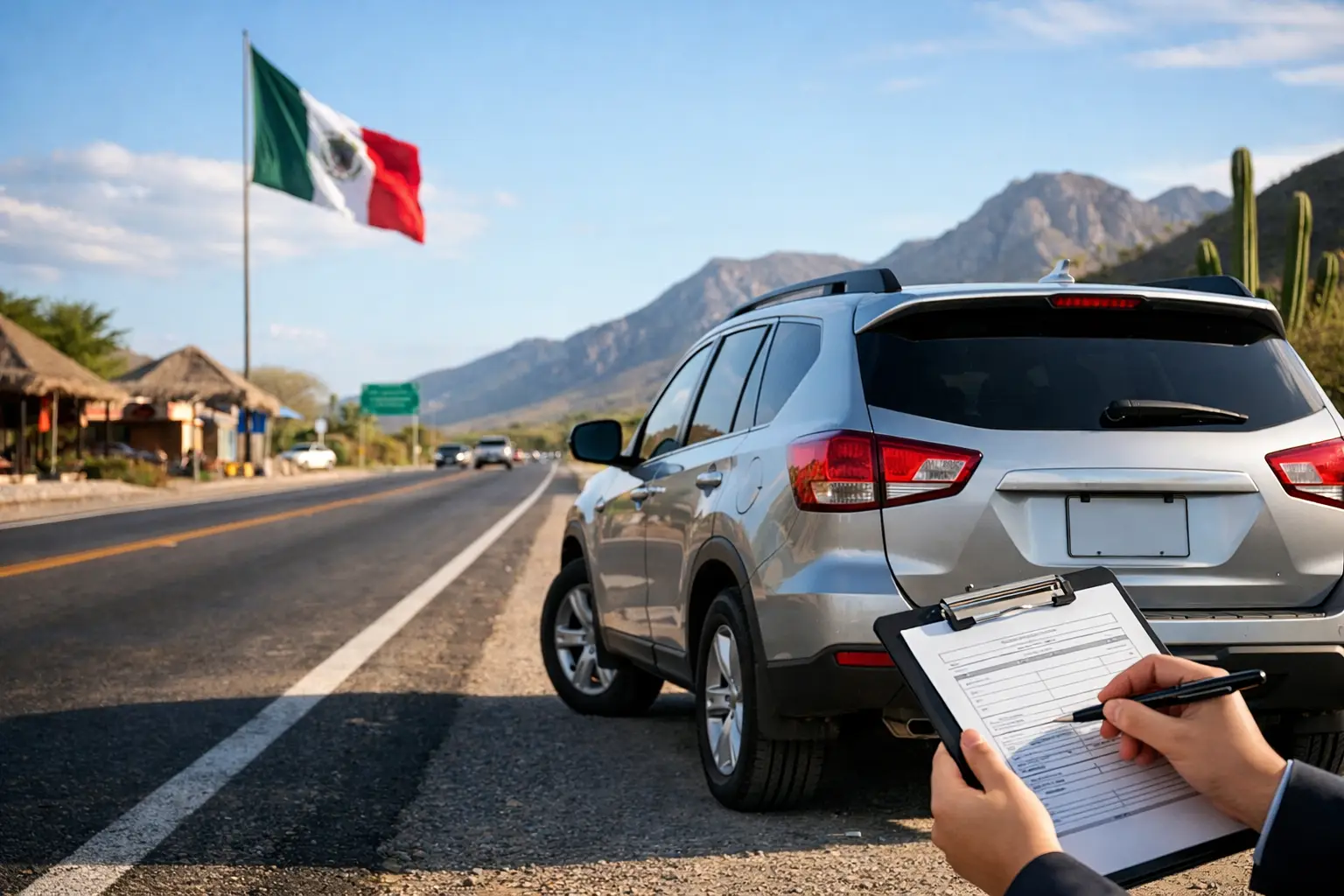
Getting into a fender bender in Mexico with U.S. plates is not the time to find out your U.S. auto policy stops at the border. Mexican auto insurance for US plated cars is a separate policy, and if you drive in Mexico without it, you can be left paying out of pocket for liability, legal support, vehicle damage, or even roadside issues when you need help most.
For expats, snowbirds, retirees, and long-stay visitors, this is not a minor technical detail. It is basic protection for driving legally and practically in Mexico. The right policy is not just about checking a box. It is about making sure the vehicle you rely on every day is covered in a system that works differently from the one you know in the U.S. or Canada.
Why mexican auto insurance for us plated cars matters
Mexico does not recognize U.S. or Canadian auto liability insurance as proof of financial responsibility for accidents on Mexican roads. Even if your domestic policy mentions limited coverage in Mexico, that usually applies only in narrow situations and often does not satisfy local liability requirements. In real-world claims, that gap matters.
Mexican liability coverage is the foundation. If you cause property damage or bodily injury, the claim is handled under Mexican law. A proper Mexican policy is built for that. It can also include legal assistance, which is one of the most overlooked parts of the coverage. After an accident, having access to local legal support and claims coordination can make a stressful situation far more manageable.
This is especially relevant for people living in Mexico part-time or full-time with an American plated vehicle. Many drivers assume they only need insurance when crossing occasionally for a weekend trip. In practice, if the car is in Mexico and being driven regularly, the need is ongoing.
What coverage should a policy include?
The right answer depends on how often you drive, where the vehicle is kept, and whether the car is financed, newer, or used mainly for local errands. Still, a strong policy usually starts with civil liability and then expands based on how much risk you want to retain personally.
Liability coverage protects you if you injure someone or damage their property. In Mexico, minimum limits may not be enough for many expats and second-home owners, especially in areas with heavier traffic or higher-value vehicles. Choosing higher limits is often a sensible move.
Physical damage coverage matters if you want protection for collision, rollover, vandalism, fire, flood, or theft. Some drivers skip this on older vehicles because the premium may not justify the payout. Others want full protection because replacing a vehicle in Mexico, or dealing with repairs while managing import status and parts availability, can be a real headache.
Medical payments for occupants can also be useful. So can roadside assistance, towing, tire service, locksmith help, and bail bond or legal aid features. These add-ons are not glamorous, but when you are on a toll road outside your usual area or dealing with a breakdown after dark, they become very relevant very quickly.
Mexican auto insurance for US plated cars is not one-size-fits-all
This is where many online quote systems oversimplify things. A policy for a winter visitor spending two months in Los Cabos is not necessarily the same as a policy for a full-time resident in Lake Chapala or a family driving regularly between Arizona and Puerto Peñasco.
Some drivers need a short-term policy for a specific trip. Others need an annual policy because the car stays in Mexico for extended periods. Some want broad physical damage protection and low deductibles. Others mainly want strong liability coverage and legal defense at a more modest premium.
Vehicle status matters too. The carrier may ask whether the car is legally in Mexico under a temporary import permit where required, whether it is used for personal or business purposes, and who will be driving it. If the vehicle is financed or leased, there may also be lender requirements that affect the type of coverage you need.
Common mistakes expats make
The biggest mistake is assuming U.S. coverage is enough. The second is buying the cheapest policy without looking at what is actually included. Not all policies offer the same legal assistance, roadside support, valuation method, deductible structure, or claims responsiveness.
Another common issue is misreporting how the vehicle is used. If a car is in Mexico for long stretches or primarily driven there, the policy should reflect that reality. Trying to fit a long-term situation into a short-term travel setup can create problems later.
Drivers also overlook who is covered. If your spouse, adult child, visiting family member, or household employee may use the vehicle, the policy should be reviewed carefully. Insurance for named drivers versus permissive use can vary.
Finally, many people wait until the day before a trip or border crossing. That is doable in some cases, but it leaves no room to compare carriers, ask questions, or correct errors in vehicle details. For a policy that may need to respond under Mexican law, accuracy matters.
How to choose the right policy
Start with how the vehicle fits into your life in Mexico. If the car is essential for day-to-day living, full annual coverage usually makes more sense than piecing together short-term policies. If you only drive into Mexico a few times a year, a trip-based solution may be enough.
Next, look at your risk tolerance. Would you be comfortable paying for your own repairs if the car is damaged? If not, physical damage and theft coverage deserve serious attention. If the vehicle is older and lower in value, you may decide liability and legal protection are the priorities.
Then look beyond price. A lower premium can come with higher deductibles, narrower benefits, or less helpful claims support. That does not automatically make it a bad policy, but it does mean you should know what trade-off you are making.
This is where working with a specialist broker helps. A firm like Launa Brockman Expat Insurance can sort through carrier options for expats and cross-border drivers, explain eligibility, and help match the policy term and coverage level to the way you actually use the vehicle.
What information you will usually need for a quote
Most carriers want the basics first: vehicle year, make, model, VIN, plate number, and driver information. You may also be asked where the vehicle is garaged, how long it will be in Mexico, and whether you want liability only or fuller protection.
If the vehicle is high value, modified, commercial, or used in a way that falls outside standard personal driving, underwriting can be more specific. The more accurate the information, the better the quote will reflect the real risk.
For many standard situations, quoting and issuing a policy can be done quickly. But quick should not mean rushed. If you are not sure whether your vehicle qualifies, whether your import status affects coverage, or whether your driving pattern fits an annual versus short-term plan, ask before you bind the policy.
When annual coverage usually makes sense
Annual mexican auto insurance for us plated cars is often the better fit for expats, retirees, and second-home owners who spend substantial time in Mexico. It simplifies renewals, avoids gaps between trips, and gives you continuous protection if the vehicle remains in country.
It can also make practical sense for drivers who cross the border multiple times a year. Buying one annual policy is often easier than tracking separate effective dates for every trip. The cost difference may or may not be dramatic, depending on the vehicle and coverage level, but the convenience alone is valuable for many clients.
That said, short-term coverage still has a place. If you are taking a limited trip and the vehicle will not remain in Mexico, a temporary policy may be perfectly appropriate. The key is matching the policy term to the actual use of the car.
Driving in Mexico with U.S. plates should feel straightforward, not uncertain. The right insurance does more than satisfy a legal requirement – it gives you a practical plan for what happens if something goes wrong. If you are taking the time to protect your home, health, and life in Mexico, your vehicle deserves the same level of attention.