
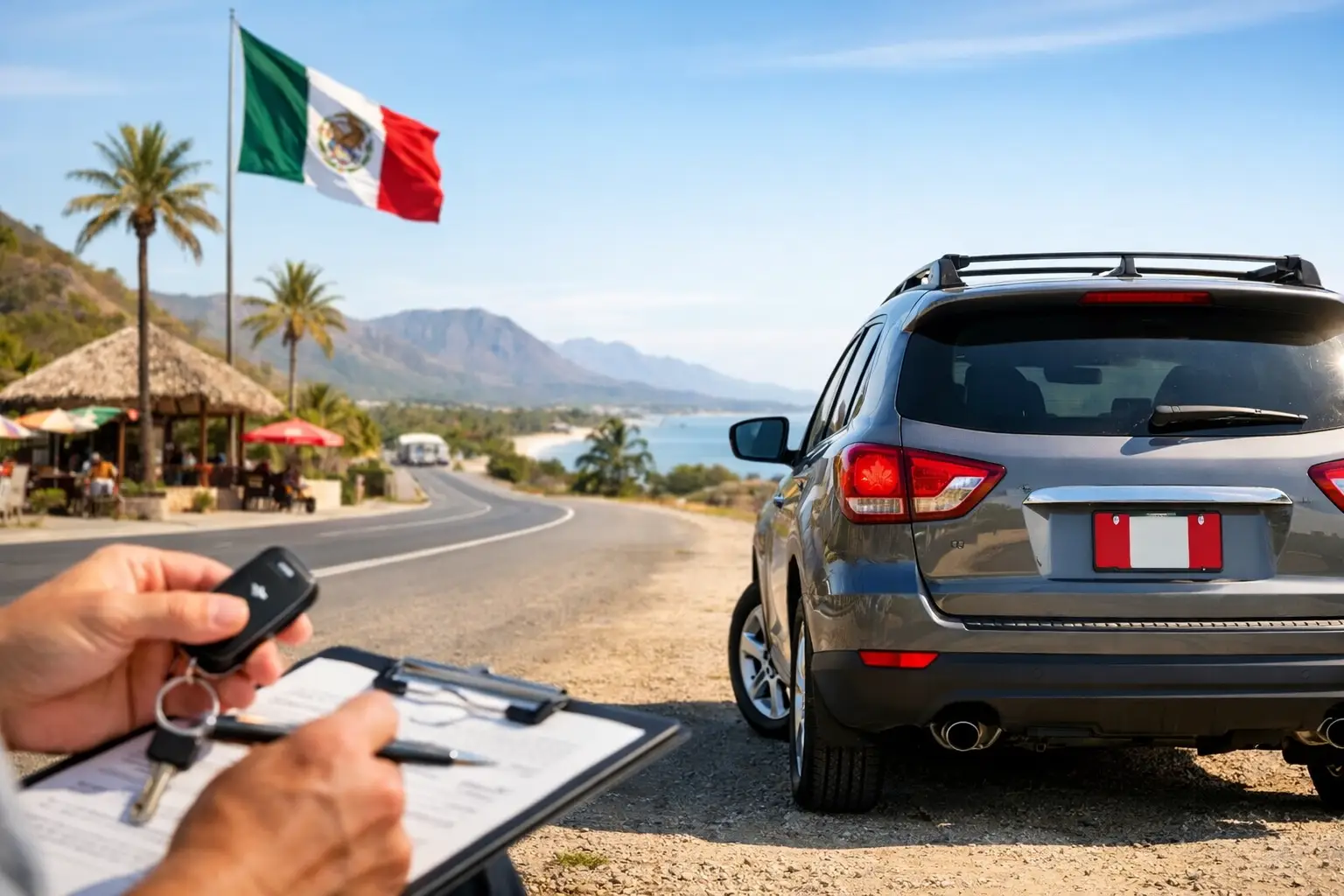
If you are bringing your Canadian-plated car, truck, or SUV into Mexico, your Canadian policy does not give you the protection you need once you cross the border. Mexican auto insurance for canadian plated vehicles is not just a smart extra. It is the policy that responds to Mexican legal and claims requirements, especially if you cause injury or property damage.
That distinction matters more than many travelers expect. A border crossing can feel routine if you spend winters in Puerto Vallarta, Lake Chapala, Los Cabos, or the Riviera Maya. Insurance is where routine assumptions can get expensive. Mexico handles liability, claims adjustment, and legal processes under its own system, so you need coverage issued for Mexico, even when the vehicle itself keeps Canadian plates.
Why Mexican auto insurance for Canadian plated vehicles is necessary
The most practical reason is liability. If you are involved in an accident in Mexico, the key issue is not whether you have insurance back home. The question is whether you have a valid Mexican policy that can respond under Mexican law.
Many Canadian drivers carry strong coverage at home and assume that some form of extension applies abroad. Sometimes there may be limited physical damage language for short trips, but that does not replace a Mexican liability policy. Liability is the part that protects you if you injure another person, damage another vehicle, or damage property. In Mexico, that needs to be handled by a Mexican insurer.
There is also a claims handling issue. A local adjuster, local legal support, and a policy written for the country where the loss occurs can make a major difference after an accident. When people wait until the last minute or buy the cheapest option without checking the details, they often discover the gaps only when they need help most.
Who needs this coverage
This type of policy is designed for Canadian residents, snowbirds, retirees, second-home owners, and long-stay visitors driving vehicles that remain registered in Canada. It can also be the right fit for expats who split time between Canada and Mexico and have not transferred their vehicle to Mexican plates.
The exact policy term depends on how you use the vehicle. Someone driving down for a two-week road trip has different needs than someone spending five months in Ajijic or six months in Baja. Daily and short-term policies can work for brief visits, while annual coverage is often a better value for repeat crossings or extended stays.
The real deciding factor is not just trip length. It is how often you enter Mexico, where you drive, and whether you want continuity of protection rather than arranging a new policy every time.
What a good policy should include
At minimum, look for liability coverage that meets the realities of driving in Mexico. Lower-priced policies may look attractive at quote stage, but the better question is whether the liability limit is high enough for your comfort level and where you plan to drive.
A strong policy may also include physical damage coverage for your own vehicle, theft, legal assistance, roadside support, medical payments for occupants, and bail bond or legal defense features. Not every driver needs every option. If your vehicle is older and you would not carry collision at home, you may decide to focus on liability only. If your vehicle has significant value, financed status, or sentimental importance, broader coverage usually makes more sense.
Deductibles are another area where details matter. Lower deductibles generally mean a higher premium. Higher deductibles can reduce cost, but you need to be comfortable paying that amount out of pocket if there is a claim.
How pricing usually works
Premiums for mexican auto insurance for canadian plated vehicles are based on several factors. The insurer will usually consider the year, make, model, and value of the vehicle, the term of the policy, the type of coverage selected, and where the vehicle will be driven.
Drivers are often surprised that annual coverage can be more practical than buying multiple short-term policies, especially for frequent visitors. On the other hand, if you only enter Mexico once a year for a short stay, a daily or temporary plan may be the better fit.
Age and usage can also affect pricing. Some carriers are more flexible than others when it comes to older vehicles, specialty vehicles, or unusual travel patterns. That is where working with a broker who understands expat and cross-border insurance is helpful. The lowest quote is not always the right quote if it leaves out the coverage that matters most in a real-world claim.
Common mistakes Canadian drivers make
One of the biggest mistakes is assuming a Canadian insurance card is enough. It is not. Another is buying only at the border without comparing coverage terms, limits, and exclusions. Convenience matters, but so does policy quality.
A third mistake is choosing coverage based only on the vehicle value. In Mexico, the liability side is often the bigger concern. Serious injury claims can become expensive quickly, and legal complications can be stressful if your policy support is weak.
There is also confusion around trip timing. Some people wait until the day of travel and then rush through the purchase. That can lead to incorrect vehicle details, wrong travel dates, or selecting a policy term that does not match actual use. Fixing errors after issue is not always simple.
What documents and details you usually need
Getting a quote is typically straightforward if you have the basic information ready. Most insurers or brokers will ask for the vehicle year, make, model, and VIN, along with the license plate number, driver information, and travel dates or requested term.
You may also need to confirm whether you want liability only or fuller protection including physical damage and theft. If the vehicle is financed or leased, mention that early. It can affect the coverage you should carry.
Accuracy matters here. A wrong model year, incorrect VIN, or misreported use can create problems later. Taking a few extra minutes at quote stage is better than dealing with a policy correction while preparing to cross the border.
Choosing short-term vs. annual coverage
Short-term coverage works well for occasional visits, quick vacations, and one-off road trips. It keeps costs tied to actual travel dates and can be efficient if you rarely drive into Mexico.
Annual coverage is often the better option for snowbirds, part-time residents, and anyone who enters Mexico multiple times a year. It simplifies planning and avoids the risk of forgetting to renew before a new trip. For many Canadians who spend every winter in Mexico, annual coverage is the more practical path.
This is one of those areas where the right answer depends on your pattern, not a generic rule. If your travel is predictable and repeated, annual often wins on convenience. If your trips are limited and short, temporary may be more sensible.
Why advisor support matters
Cross-border auto coverage is easy to oversimplify. The vehicle has Canadian plates, the trip is in Mexico, and the driver may live part-time in both places. That creates questions about eligibility, policy term, vehicle value, and carrier fit.
A service-driven brokerage can help you sort through those variables quickly instead of forcing you into a one-size-fits-all policy. That is especially useful if you have an older vehicle, a classic car, a truck used for seasonal relocation, or a mixed-use travel schedule. Launa Brockman Expat Insurance works in exactly this space, helping expats and seasonal residents find coverage that fits how they actually live and drive in Mexico.
The goal is simple. Get a policy that is valid, practical, and easy to issue before you are on the road.
Final checks before you drive into Mexico
Before departure, confirm the policy dates, the insured vehicle details, the drivers listed if required, and the contact instructions for claims or roadside assistance. Keep a digital copy and an accessible printed copy. If you are also handling immigration or temporary import permit requirements, keep those documents organized separately so nothing gets mixed up at inspection points.
Good insurance should remove friction, not add to it. If your policy is clear, your documents are accurate, and your coverage matches your real travel pattern, you can spend a lot less time second-guessing and a lot more time enjoying the drive south.