
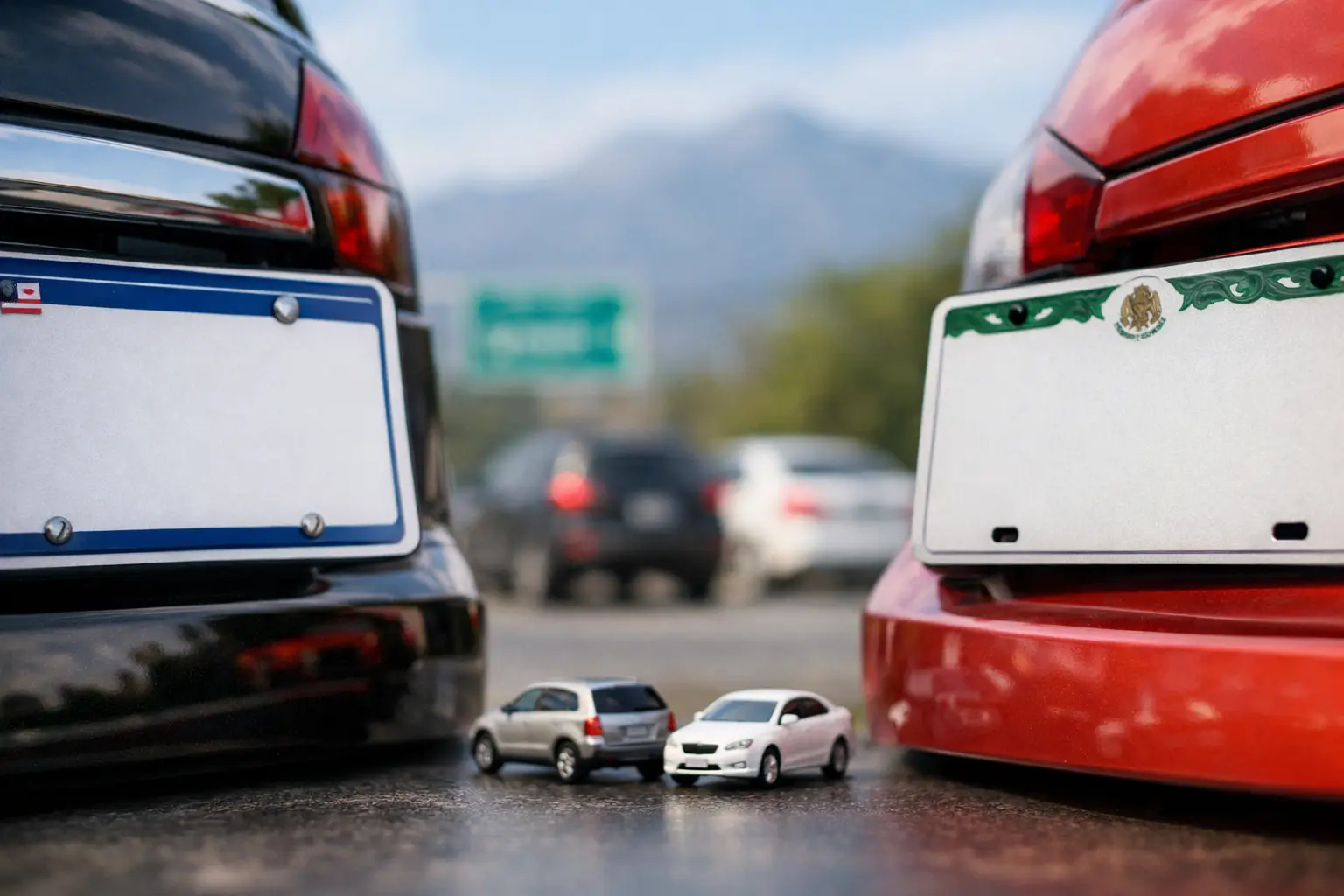
A vehicle can be perfectly legal to drive in Mexico and still have the wrong insurance policy attached to it. That is the practical issue behind foreign plates vs Mexico plates insurance. The registration on your car affects which Mexican auto policy you can buy, how the insurer rates the vehicle, and what documentation may be needed if you have an accident.
For American and Canadian residents, snowbirds, and full-time expats, the right answer is not simply “buy Mexico insurance.” You need a policy built for the plates on your vehicle, the way you use it, and the length of time it will remain in Mexico.
Foreign plates vs Mexico plates insurance: the basic difference
A foreign-plated vehicle is registered in the United States or Canada. It may be visiting Mexico temporarily, used seasonally by a snowbird, or remain in Mexico under the applicable temporary import rules. Insurance for this vehicle is generally written as a Mexican auto policy specifically for a U.S. or Canadian plated car, truck, SUV, RV, or motorcycle.
A Mexico-plated vehicle is registered in Mexico. It normally requires a Mexican domestic auto policy designed for a locally registered vehicle. The insurer will usually need Mexican plate details, vehicle information, and ownership or registration documents before issuing coverage.
Both policy types can include the same broad categories of protection: third-party liability, legal assistance, roadside help, medical payments, physical damage, total theft, and sometimes U.S. or Canada travel coverage. But they are not interchangeable. A policy intended for a foreign-plated vehicle may not be available for a Mexico-plated car, and a domestic Mexican policy may not accept a foreign registration.
Why the plate type matters after an accident
After a collision, insurers need to identify the insured vehicle quickly and confirm that the registration, policy, driver, and use of the vehicle match the application. A mismatch can create delays at exactly the moment you need an adjuster, legal support, or help coordinating a tow.
Mexican liability coverage is especially important. Mexico handles accident liability differently than the United States and Canada, and an accident involving injuries or significant property damage can become complicated fast. Your U.S. or Canadian policy may offer limited Mexico coverage, may restrict how far you can drive from the border, or may not provide the local claims and legal response you need.
A Mexican auto policy is designed to address the local requirement for civil liability coverage and provide a Mexican insurer or assistance network to respond. Limits, deductibles, exclusions, and legal-assistance terms vary by carrier and policy. The lowest-priced quote is not always the best fit if it leaves you with low liability limits or excludes the way you actually use the vehicle.
Insurance for U.S. and Canadian plated vehicles
Foreign-plated vehicle insurance is often the right category for visitors, seasonal residents, and expats who retain registration in their home state or province. Policies may be available for a short trip, several months, or an annual term, depending on the vehicle and carrier.
When requesting a quote, have your VIN, make, model, year, current plate information, and stated value ready. The stated value matters when you want physical damage and total theft protection. Liability-only coverage can be appropriate for an older vehicle you would not repair after a major loss, but it does not pay to repair your own car after a collision.
The vehicle’s legal import status also deserves attention. Insurance does not replace import paperwork or make an ineligible vehicle legal to keep in Mexico. If your vehicle is under a temporary import permit, keep the permit and related documents current. If you are driving in the Baja Peninsula or another area with different vehicle rules, confirm how your registration and insurance needs apply to your route and residence situation.
Common foreign-plate situations
A retiree who drives a U.S.-plated SUV to Lake Chapala each winter may want an annual Mexican policy with meaningful liability limits, roadside assistance, and physical damage coverage. A family flying into Cancun and renting a U.S.-plated RV for a cross-country trip has a different risk profile and may need short-term coverage. A full-time resident who continues using a Canadian-plated car should review both insurance eligibility and the vehicle’s import status before simply renewing last year’s policy.
The details matter. Personal use, business use, delivery driving, rideshare activity, off-road travel, towing, and certain modifications can affect whether a policy applies. Tell your broker how the vehicle is actually used rather than assuming a standard personal-auto policy covers every situation.
Insurance for Mexico-plated vehicles
Once a vehicle is registered in Mexico, request insurance as a Mexico-plated vehicle. Domestic Mexican policies are generally structured for locally registered cars and may offer annual coverage with options for liability, collision or physical damage, theft, glass, medical expenses, legal assistance, and roadside service.
Insurers may ask for the tarjeta de circulación, Mexican plates, VIN, purchase details, and the vehicle’s value. If you bought a car from another expat or from a dealer, make sure the registration transfer is complete. Coverage should reflect the current legal owner and the vehicle’s current plates, not the seller’s old documents.
Mexico-plated insurance is often the cleaner long-term option for a vehicle that is legally imported and registered in Mexico. It aligns the policy with the local registration record and can be easier to maintain year after year. Still, terms differ significantly among carriers. Some policies include limited travel into the United States, while others require an endorsement, separate coverage, or a U.S. policy for travel north of the border.
Do not assume every driver is automatically covered
Many Mexican auto policies cover authorized drivers, but age requirements, licensing requirements, excluded drivers, and claims conditions vary. If adult children, visiting friends, employees, or a household helper regularly drive the car, disclose that before purchase. The same applies if the registered owner is not the primary driver.
This is also a good time to consider your liability limit realistically. A basic policy may satisfy a minimum requirement but may not be adequate for a serious accident involving multiple vehicles, injuries, or expensive property damage. Higher liability limits usually cost less than people expect compared with the financial exposure they help address.
How to choose the right policy
Start with the plate, then work outward. Your insurer needs to know whether the vehicle is U.S., Canadian, or Mexico registered. Next, identify where it will be driven, how long it will be in Mexico, whether it is financed, and whether you want protection for damage to your own vehicle.
For a clear quote, provide these four items: the registration jurisdiction, VIN, vehicle value, and intended use. Then decide whether you need liability only or broader protection that includes physical damage and theft. Add roadside assistance and legal assistance when the policy offers them, particularly if you drive outside major expat areas or take long road trips.
Review deductibles carefully. A lower premium can come with a higher deductible for collision, theft, glass, or named-storm damage. Ask how the policy handles partial theft, vandalism, towing after an accident, and repairs at a shop of your choice. If your vehicle is financed or leased, confirm that the lender’s requirements can be met.
Get the plate question right before you issue
The simplest way to avoid a preventable coverage problem is to match the policy to the plates currently on the vehicle. Do not insure a Mexico-plated car as though it still has U.S. plates, and do not assume a domestic Mexican policy will automatically work for a Canadian-plated vehicle.
If you are changing a vehicle from foreign registration to Mexican registration, notify your insurance advisor before the plates change. The policy may need to be rewritten rather than amended. Launa Brockman Expat Insurance can help review the registration, intended use, and coverage options before you issue a policy.
Your car is part of your life in Mexico, whether it gets you to the airport, your second home, the grocery store, or a road trip across the country. Get the plate category right first, then choose coverage that gives you practical support when the unexpected happens.